
Technology & Innovation··4 min read
Clash Detection: Identifying BIM Conflicts Before Construction
By ONE-M
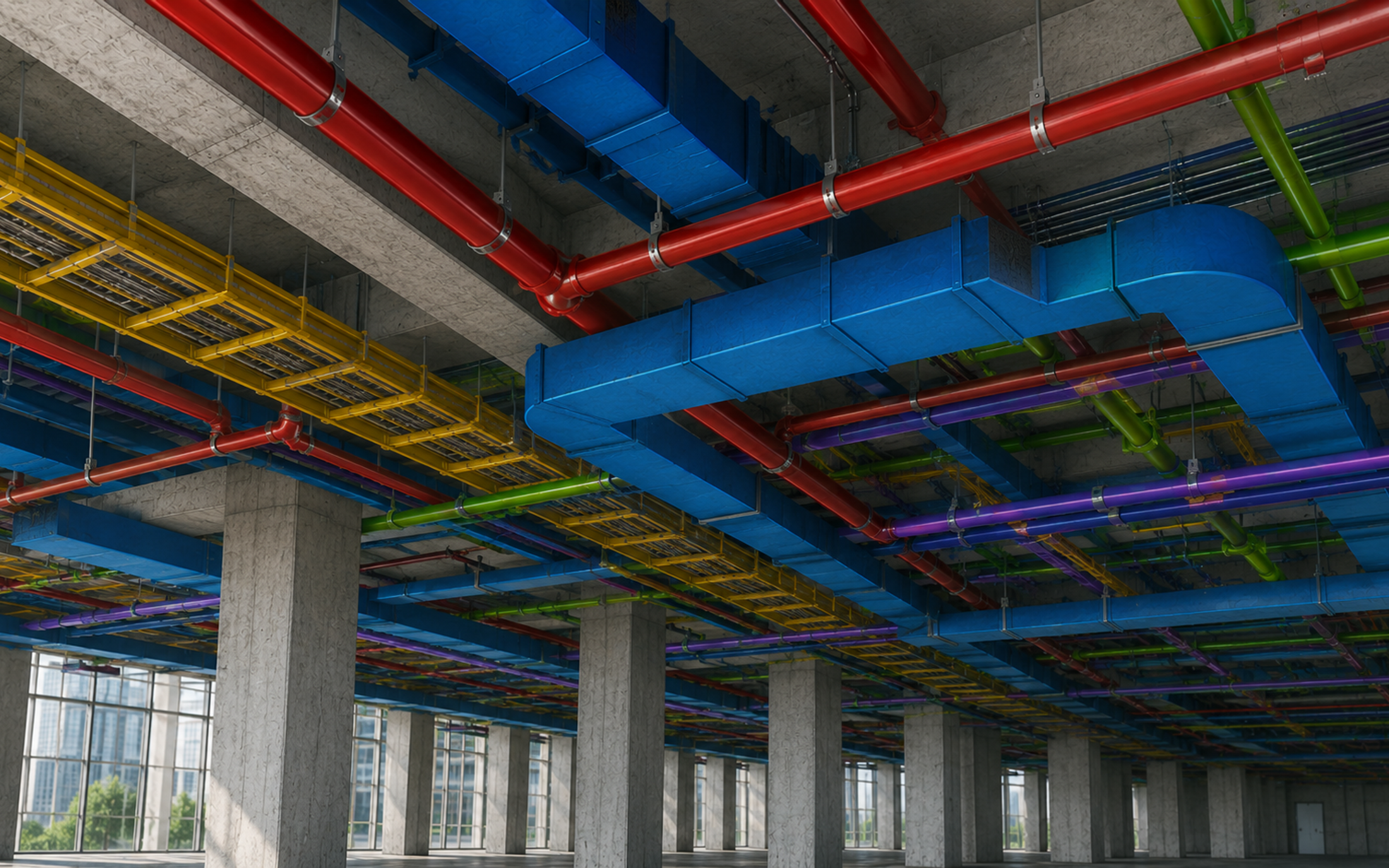
One of the major causes of project delays, cost overruns, and rework is poor coordination between design disciplines. This is particularly important in complex projects such as office buildings, hospitals, hotels, and mixed-use developments, where architectural, structural, and MEP systems must work together within the same space.
Clash Detection allows project teams to identify many of these conflicts during the design and coordination stages, before they become costly problems on site.
1. What is Clash Detection?
Clash Detection is the process of identifying conflicts or incompatibilities between building elements within coordinated BIM models before construction begins.
Typical clashes may include:
- HVAC ducts intersecting structural beams
- Fire protection pipes conflicting with plumbing systems
- Cable trays interfering with architectural elements
- Floor openings that do not align with pipe routes
Identifying these issues early gives the project team an opportunity to coordinate and resolve them before installation begins on site.
2. Common Types of Clashes
1. Hard Clash
A Hard Clash occurs when two or more building components physically occupy the same space.
Examples:
- An HVAC duct passing through a structural beam
- A plumbing pipe conflicting with a fire protection pipe
These conflicts generally require design or routing changes before construction.
2. Soft Clash
A Soft Clash occurs when components do not physically intersect, but the required clearance for installation, operation, access, or maintenance is insufficient.
Examples:
- Insufficient maintenance clearance around an AHU
- Inadequate space for opening or servicing an electrical panel
Soft clashes are important because an installation may technically fit within the model while still being difficult or impractical to operate and maintain.
3. Workflow Clash
A Workflow Clash relates to construction sequencing, installation methods, or access requirements rather than direct physical interference.
For example, individual components may fit within the final design, but the planned sequence of work may make it difficult or impossible to install them efficiently.
3. Why is Clash Detection Important?
Reducing Rework
Resolving coordination issues during the design stage can reduce the need to modify completed or partially completed work on site.
Minimizing Project Delays
Early identification of conflicts can reduce situations where construction must stop while teams wait for revised drawings, technical decisions, or coordination solutions.
Improving Construction Quality
Better coordination between disciplines helps building systems and structural elements to be installed according to the intended design.
Improving Project Coordination
BIM-based coordination allows designers, contractors, consultants, and project stakeholders to review issues using a shared visual model, supporting clearer communication and decision-making.
4. Clash Detection and BIM
Clash Detection is one of the practical applications of Building Information Modeling (BIM). Models from different disciplines can be coordinated and reviewed together, including:
- Architecture
- Structure
- Mechanical
- Electrical
- Plumbing
Coordination software can then help identify potential conflicts between these models, allowing the project team to review, assign, track, and resolve issues before they affect construction.
5. Applications in Complex Projects
Clash Detection is particularly valuable in projects where multiple building systems must be coordinated within limited space, such as:
- Airports
- Hospitals
- Data centers
- Large office buildings
- Mixed-use developments
As BIM adoption continues to expand, digital coordination and clash review are becoming increasingly important parts of design and construction management, including in Thailand.
6. The Role of Project and Construction Management
Clash Detection is not only a software process. Effective coordination also requires clear responsibilities, timely decisions, and systematic follow-up.
Project Management (PM) and Construction Management (CM) can support the process by:
- Establishing coordination procedures
- Monitoring the resolution of identified issues
- Prioritizing clashes according to their project impact
- Coordinating designers, contractors, and other stakeholders
- Managing potential implications for schedule, cost, and constructability
This helps transform clash reports from technical findings into coordinated actions that can be implemented by the project team.
7. ONE-M Perspective
Clash Detection demonstrates the value of identifying and resolving potential problems before they reach the construction site. When supported by effective project coordination, it can help reduce rework, manage project risks, improve construction quality, and support more efficient project delivery.
As projects become increasingly complex, ONE-M believes that effective coordination between design, construction, and project management teams is essential to achieving better project outcomes.